

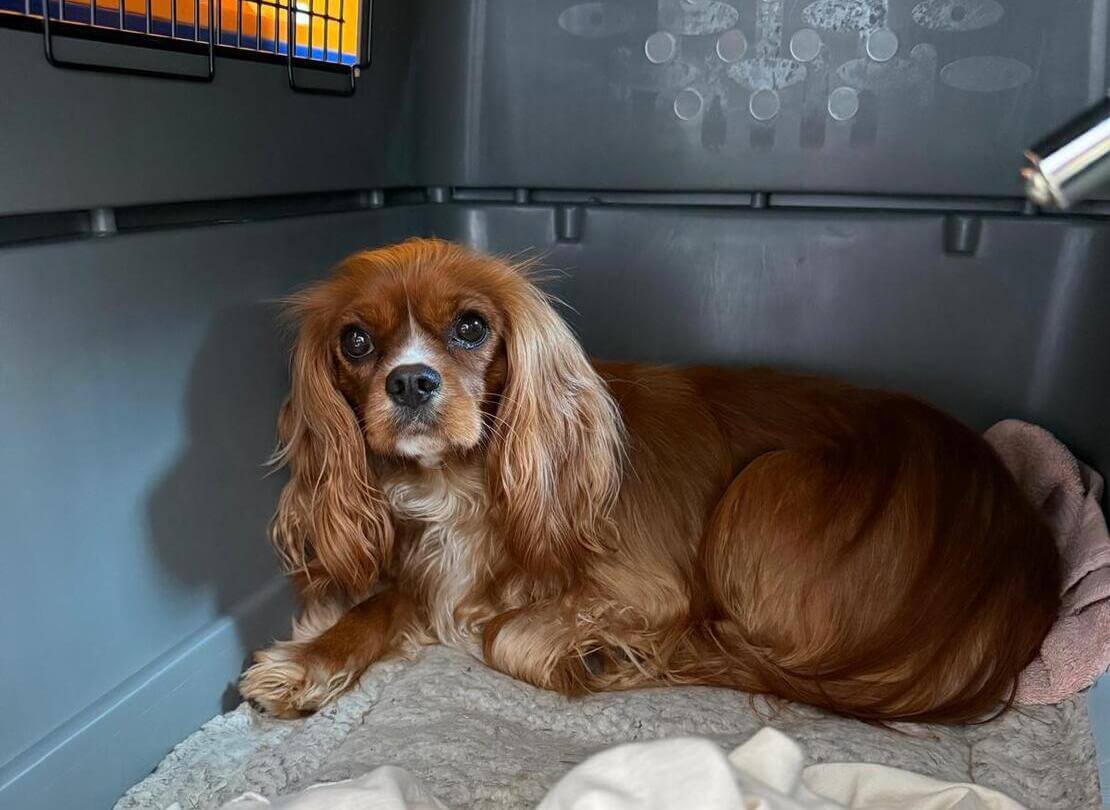
When Ginger’s human mom flew from Texas to Los Angeles with her 7.5-month-old baby and her dog Ginger in tow, she had one stop left before the real journey began: handing Ginger off to the Across The Pond Pets team for her flight to Adelaide, Australia. What followed was a textbook example of how a well-coordinated international pet relocation should go — and a good case study for anyone planning a similar move to Australia or its quarantine-easing neighbor, New Zealand.
Moving across the world with a pet is stressful even when everything goes right. Ginger’s human mom was managing two big transitions at once — flying solo with a 7.5-month-old baby and her dog Ginger from Texas to Los Angeles, then handing Ginger off to our team for the international leg of the journey from LA to Adelaide, Australia. The whole move, from the first message in our family group chat to Ginger curled up asleep in her cozy new bed in Adelaide, took just over two weeks.
Ginger’s Journey: From a Texas Living Room to an Australian Backyard
Our Anna on the Los Angeles team coordinated the handoff directly with Ginger’s human mom: a pickup at 3:30 PM the next day at the Renaissance Los Angeles Airport Hotel. Simple logistics, clearly communicated, with one small but meaningful detail — Anna let her know she didn’t need to pack anything extra beyond Ginger and her crate, though a blanket or a worn T-shirt with her scent was a nice option for comfort during the flight.
That kind of small, practical reassurance matters more than people expect. Anyone who has flown internationally with a pet for the first time tends to worry about everything — food, medication, favorite toys, special bedding. Most of the time, the honest answer is: less is more. A familiar-smelling item and a crate she’s comfortable in goes further than an overpacked travel bag.
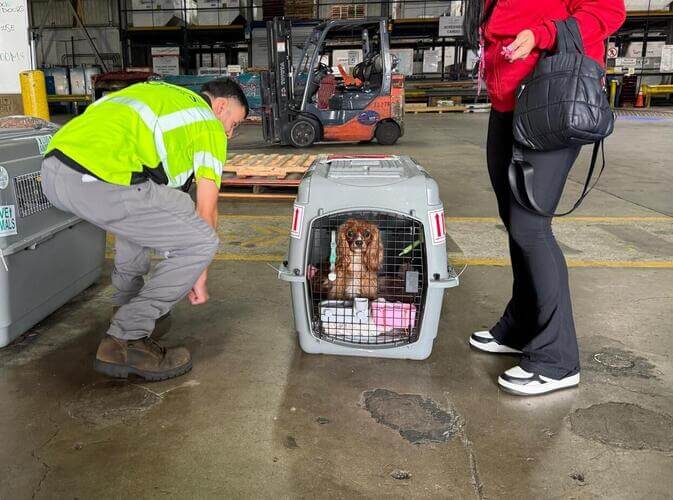
Ginger checking in at the Qantas counter before her flight to Adelaide.
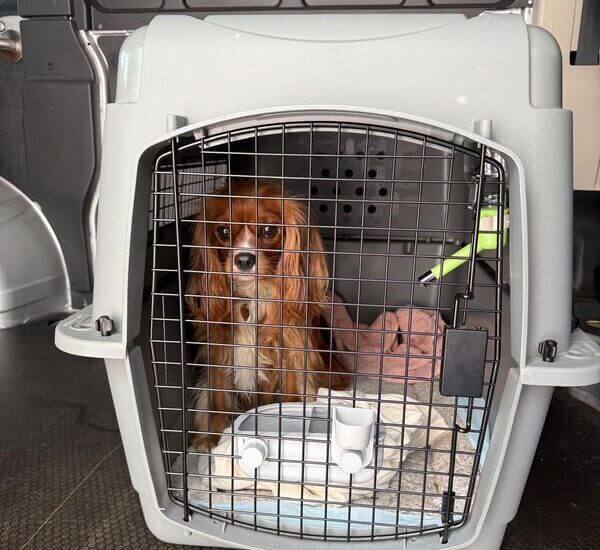
All checked in and ready — the Qantas team fell in love with her on the spot.

Mission accomplished — Ginger settled in, happy and comfortable in her new bed in Adelaide.
The Two-Day Timeline That Made It Work
What stands out most about this relocation is how calm and well-paced it was. There was no scrambling, no last-minute documentation panic, no surprises at the airport. Here’s how it unfolded:
-
Day 1, Morning
Hand-off Confirmed in Los Angeles
Anna confirmed pickup time and location at the airport hotel, and gave Ginger’s human mom simple, practical packing guidance: nothing extra needed beyond Ginger and her crate.
-
Day 1, Late Afternoon
Ginger Settles In with the Team
After her cross-country flight with Ginger’s human mom and the baby, Ginger was understandably exhausted. As soon as her crate was assembled, she went straight to sleep — a good sign that she felt secure with the transition already underway.
-
Day 2, Afternoon
Final Fit-to-Fly Documentation Collected
Anna collected the original fit-to-fly veterinary document and added it to Ginger’s travel paperwork before heading to the airport — the kind of final document check that prevents problems at check-in.
-
Day 2, Pre-Flight
A Calm Pre-Departure Walk
Our JC reported that Ginger showed no separation anxiety and no crying — just a confident, well-adjusted dog out for a pre-flight walk. Qantas staff checked her in without issue and, by all accounts, fell for her immediately.
-
Day 3
Quarantine Confirms Safe Arrival
Australia’s quarantine team emailed confirmation that Ginger had arrived safely — the final checkpoint in the country’s strict but predictable import process.
-
~10 Days Later
Reunited in Adelaide
After completing Australia’s mandatory quarantine period, Ginger was picked up and brought home — immediately playing in the yard and at the park, completely exhausted by evening from all the joyful chaos of being reunited with her family.
Planning a move to Australia or New Zealand with your pet?
Our IPATA-certified team coordinates every document, test, and booking — from your front door to quarantine clearance and beyond.
Australia’s Pet Import Requirements at a Glance
Ginger’s relocation went smoothly because every requirement was handled well before departure day. Australia maintains some of the strictest pet biosecurity rules in the world, and for good reason — the country is free of rabies and many other diseases common elsewhere, and it intends to stay that way. For a full breakdown of every step, see our complete Australia pet import guide, but the essentials that applied to Ginger’s trip include:
- A valid rabies vaccination and microchip, implanted and documented well in advance of travel
- A USDA-endorsed health certificate completed by an accredited veterinarian shortly before departure
- An IATA-compliant travel crate, properly fitted — this is exactly what Anna’s in-person fitting appointment was for
- A fit-to-fly veterinary certificate, collected on the day of travel and added to the official paperwork
- A mandatory quarantine period upon arrival, typically around 10 days at an approved facility, after which the pet is released to their family
Every one of these steps shows up in Ginger’s story — the crate she went straight to sleep in, the fit-to-fly document collected before the airport, the quarantine confirmation email, and finally the pickup roughly ten days after arrival. None of it happened by accident.
What About Moving a Pet to New Zealand?
If Australia is on your radar, there’s a good chance New Zealand is too — the two countries are frequently considered together, and their pet import systems share a lot of DNA. Both are island nations fiercely protective of their disease-free status, both require a USDA-endorsed health certificate from an accredited vet, and both require dogs to be free of certain banned breed types (Pit Bull Terriers, Dogo Argentino, Japanese Tosa, and Perro de Presa Canario show up on both countries’ restricted lists).
But there are real differences worth knowing before you assume the process is identical:
| Requirement | Australia | New Zealand |
|---|---|---|
| Quarantine (from USA) | ~10 days minimum, IPATA-certified shippers coordinate booking | Minimum 10 days at an MPI-approved facility |
| Titer test required | Yes — RNATT with 180-day wait | Required for dogs (FAVN); cats require FAVN only |
| Import permit | Required via BICON system | Required via MPI, apply 6 weeks ahead |
| Entry airports | Several approved international airports | Auckland or Christchurch only |
| Dogs from Australia specifically | — | No quarantine required in most cases |
| Banned dog breeds | None federally banned, state laws vary | Pit Bull Terrier, Dogo Argentino, Japanese Tosa, Perro de Presa Canario, Fila Brasileiro |
New Zealand is also in the middle of a regulatory transition of its own. A new Import Health Standard takes effect July 1, 2026, with a transition period running through April 2027, after which every pet entering the country will need to meet updated identification and documentation standards, including an official ID check completed at least six months before export. If New Zealand is part of your family’s plans, this is exactly the kind of timeline detail our documentation team tracks for you.
For families relocating specifically to New Zealand, our team manages the same kind of process Anna ran for Ginger — microchip and rabies sequencing, the titer test and its waiting period, MPI import permit applications, and quarantine facility bookings — tailored to New Zealand’s specific Import Health Standard rather than Australia’s BICON system.
Oceania destinations we serve:
Official Resources for Australia and New Zealand Pet Travel
Requirements for both countries change periodically, and the consequences of missing a step are serious — from delayed travel to extended quarantine. These are the primary official sources our team monitors continuously:
Ready to plan your own Ginger-style success story?
Whether it’s Australia, New Zealand, or anywhere else in the world, our award-winning team handles every detail so your pet’s journey goes as smoothly as Ginger’s did.