

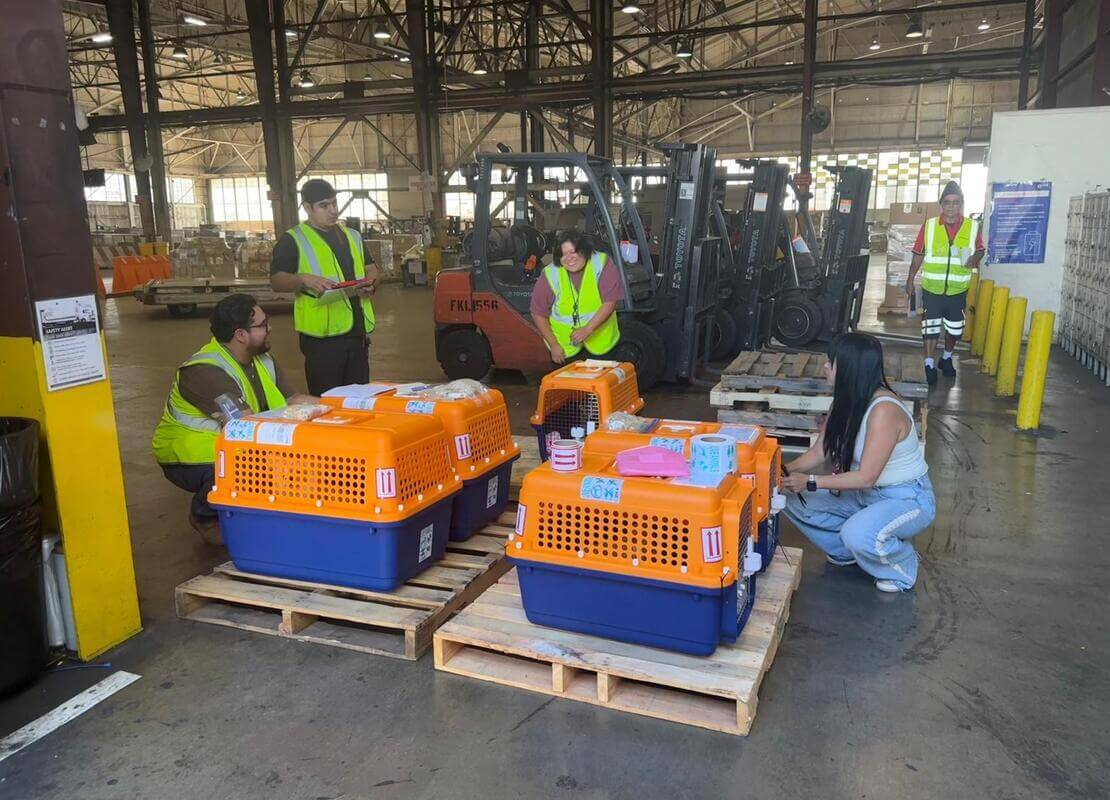
Most international pet moves involve one family and one or two animals. This one involved a single household, a full menagerie, and a seven-day deadline: 42 animals — dogs, a small colony of cats, and a rabbit — all needing to clear customs into Ireland safely, on time, and without a single one falling through the cracks. Here's how our team pulled it off, and what the same process looks like when it's just your one dog or cat making the trip.
The Challenge
Most international pet relocations involve one family and one or two pets. This one involved a single family, a full household of animals, and a hard deadline: everyone needed to be safely in Ireland within about a week.
The household included a mixed group of dogs, a small colony of cats, and a rabbit — 42 animals in total. Some pets would travel with the family on a private aircraft. The rest needed to move independently, by commercial cargo and passenger routings, coordinated so that no animal spent more time in transit than necessary.
That meant running what amounted to several relocations at once, each with its own paperwork, airline rules, and timing — without losing track of a single pet along the way.
Planning the Impossible
Every pet entering Ireland needs an EU-format health certificate endorsed by USDA, current rabies vaccination documentation, and microchip verification. Multiply that by 42 animals, each needing its own paperwork prepared, examined, endorsed, and physically delivered to the departure airport before a flight cutoff.
To keep the health certificates moving on schedule, our team arranged for USDA-endorsed paperwork to be hand-carried on commercial flights up from our veterinary partner's office to the departure city, timed to arrive before each shipment's cargo cutoff — a level of coordination that's normally reserved for time-critical medical shipments, not pet travel.
Why You Can't Just Put Them All on One Flight
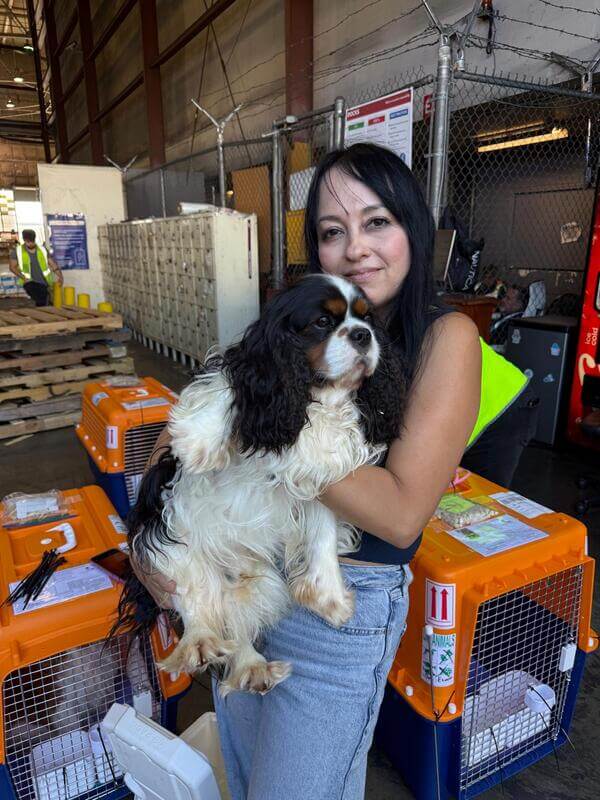
One of the more surprising things we ran into: several commercial pet-charter services cap the number of animals a single owner can ship on one aircraft — typically around five per shipment, regardless of the plane's actual capacity. That rule applies per owner, not per flight, which meant a large household couldn't simply be consolidated onto one or two departures no matter how much space was available.
So instead, the group was split intentionally across multiple carriers and multiple days — some routed direct, others through hub airports — always keeping each group small enough to meet each airline's own limits while still getting everyone moving as quickly as possible.
The Rabbit Problem
Dogs and cats get most of the attention in pet travel — rabbits are a different story entirely. Import rules, crate requirements, and feeding schedules for rabbits don't follow the same playbook as cats and dogs, and getting it wrong can mean a rejected shipment.
Our team built a separate travel and paperwork plan just for the household's rabbit, including a crate and bedding setup suited to a much more delicate, temperature- and stress-sensitive traveler, timed to its own dedicated flight.
Medical Coordination on the Move
With this many animals traveling over several days, medical needs didn't stop just because everyone was en route. Our team coordinated:
- A live video consultation with our veterinarian to administer tapeworm treatment to the full group ahead of EU entry requirements
- Pre-split antibiotic dosing for a dog on a short medication course, timed around departure and boarding hours
- Dietary notes passed to the boarding facility for pets with sensitive stomachs or specific food routines
None of this is unusual for a single-pet move. What made it demanding here was doing it consistently, correctly, and on schedule for dozens of animals at once — with several different caretakers involved on both sides of the Atlantic.
Boarding & Ground Logistics in Ireland
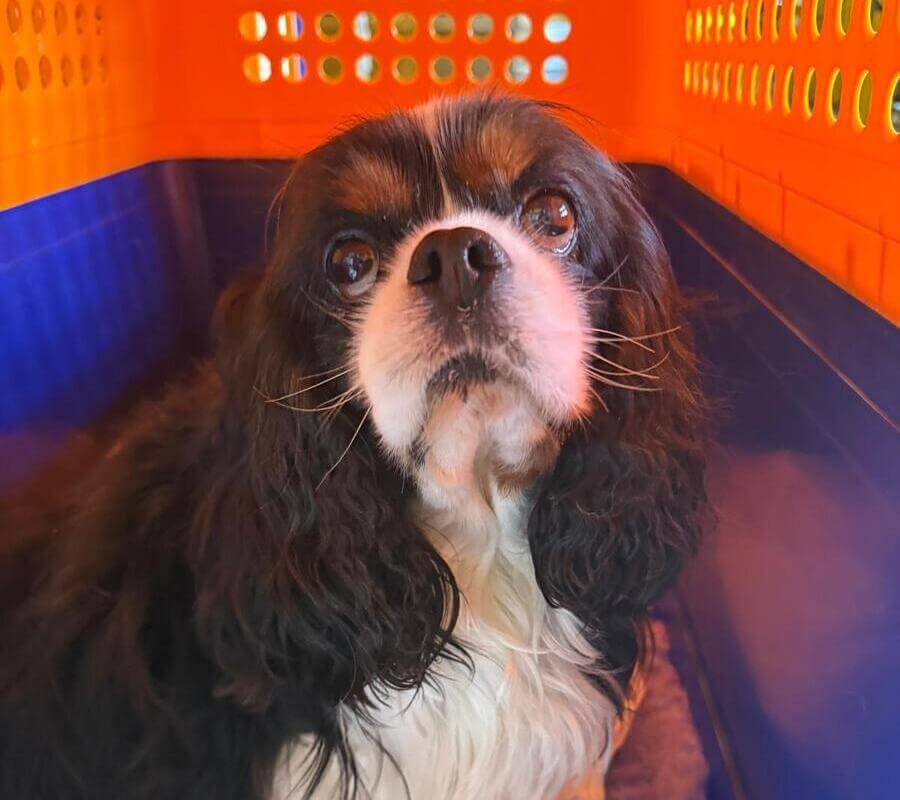
As each group cleared customs in Dublin, cats went to boarding at a cattery near Swords, Co. Dublin, while dogs went to a kennel facility in Co. Meath — giving every animal a safe, comfortable place to land while the rest of the household's move was still in progress.
From there, our team coordinated ground transportation for each group, right down to matching temperaments for shared travel crates on the final leg home.
The Final Leg — By Private Aircraft
A smaller group of pets travelled on board a private aircraft together with the family. These pets cleared customs through the passenger terminal rather than the cargo process used for the rest of the group, which meant a separate, coordinated arrival plan — including hard-sided travel crates and dedicated ground transport waiting the moment the aircraft landed.
A Specialized Escort for the Final Two
The last two pets travelled on a specialized route with a dedicated professional escort team, flying commercial from California through Amsterdam and Oslo before reaching Dublin — clearing a compliance check at each stop along the way. It's a travel option we use for pets with specific routing needs, complete with real-time updates at every leg of the journey.
The Week at a Glance

What This Means for Your Move
Most families reading this aren't moving 42 pets — they're moving one dog, or one cat, to a new country for a job or a life change. But the process behind that move is exactly the same one we just described, just at a smaller scale: the same health certificate and USDA endorsement requirements, the same import compliance research, the same attention to timing, comfort, and documentation.
If our team can manage this many moving pieces at once without losing track of a single animal, we can absolutely manage yours — with the same care, whether it's 1 pet or 42.
FAQ
Can multiple pets from the same household travel on different flights?
Yes. In fact, for larger households it's often required — many pet airlines cap the number of animals per owner on a single shipment, so multiple pets are routed across separate flights and sometimes separate days.
Do rabbits and other small pets need different paperwork than dogs and cats?
Yes. Import requirements, crating, and travel conditions differ by species. Rabbits in particular require their own permit and handling plan.
What happens if a pet needs medication during a multi-day relocation?
We build medication schedules directly into the travel plan, including coordinating with boarding facilities and, when needed, veterinary consultations during transit.
Is this level of coordination only for large moves?
No — every pet we move, whether it's one animal or forty-two, gets the same document preparation, airline coordination, and real-time updates described here.
Planning an International Pet Move?
Whether it's one pet or an entire household, our team handles the documentation, airline coordination, and customs process from start to finish.
Get Started With Your Pet's Move