


New Zealand's Ministry for Primary Industries (MPI) issued a revised Import Health Standard for cats and dogs on May 12, 2026, and the new standard is now in effect as of July 1, 2026. If you're planning to bring a dog or cat from the United States to New Zealand any time between now and 2027, here is exactly what has changed, what hasn't, and the deadline that matters most depending on when you're actually planning to travel.
What's Changing at MPI in 2026
New Zealand runs one of the strictest biosecurity borders in the world, and its Import Health Standard (IHS) for cats and dogs is the rulebook that dictates every test, treatment, and certificate a pet needs before entry. MPI's new 2026 IHS is the first full revision in several years, and it introduces a new pre-export identification requirement alongside a handful of smaller procedural changes.
The One Date That Actually Matters: April 1, 2027
From this date, every cat and dog entering New Zealand must meet the full 2026 IHS — including an official identification check completed at least 6 months before export. Working backward, that means pets who need to travel after April 2027 should have their ID check scheduled by around October 2026.
Beyond the new ID check, MPI has also made a smaller but welcome change that already took effect: as of March 1, 2026, cats and dogs from the mainland United States, Puerto Rico, the U.S. Virgin Islands, and the Northern Mariana Islands are no longer required to have official seals placed on their travel crates. If you've seen older guidance referencing crate sealing, that step has been removed for U.S.-origin pets.
The Rollout Timeline: How the Transition Actually Works
MPI is phasing this in deliberately rather than flipping a switch, which gives pet owners real breathing room — as long as they understand which phase applies to their move.
- No formal pre-export identification check requirement
- Standard microchip, rabies vaccination, and RNATT process
- Crate seals required for Category 3 pets (removed March 2026)
- New official ID check required at least 6 months before export (mandatory from April 2027)
- Updated model veterinary certificates for both Category 2 and Category 3 countries
- No crate seals required for U.S.-origin pets
Key dates at a glance
-
Mar
2026Crate Seal Requirement Removed
- Already in effect — U.S. mainland, Puerto Rico, USVI, and Northern Mariana Islands pets no longer need sealed crates
-
Jul 1
2026New 2026 IHS Takes Effect
- The 9-month transition window opens — both the 2021 and 2026 standards are accepted
-
Oct 1
2026New ID Checks Begin Rolling Out
- This is effectively the last practical date to start the new ID check process if your pet needs to travel right after the April 2027 cutoff
-
Apr 1
20272026 IHS Becomes Mandatory
- The 2021 standard is retired. Every cat and dog must meet the full 2026 IHS, including the 6-month advance ID check
Planning a move to New Zealand?
Our IPATA-certified team tracks every MPI update in real time and will tell you exactly which standard applies to your travel date.
Core Entry Requirements (These Pillars Haven't Changed)
Regardless of which IHS version applies to your move, the foundational requirements for a U.S. mainland dog or cat entering New Zealand remain the same:
Standard Requirements — U.S. Mainland (Category 3)
- ISO 11784/11785-compliant microchip implanted before the rabies vaccination
- Valid rabies vaccination and rabies neutralizing antibody titer test (RNATT)
- Import permit application submitted to MPI Animal Imports at least 20 business days before needed
- Health Certificate A (USDA-accredited vet, APHIS-endorsed) and Health Certificate B (APHIS-endorsed)
- Confirmed booking at an MPI-approved post-entry quarantine facility before the permit is issued
- Minimum 10 days in MPI-approved quarantine on arrival
Old (2021) vs New (2026) IHS: What Actually Changes for You
For most U.S. pet owners moving in 2026, day-to-day preparation looks nearly identical under either standard. The meaningful difference is entirely about the new identification check and its lead time:
| Requirement | 2021 IHS | 2026 IHS |
|---|---|---|
| Microchip & rabies vaccination | Required | Required |
| RNATT titer test | Required | Required |
| Official pre-export ID check | Not required | Required (6 months ahead) |
| Crate seal (U.S.-origin pets) | Removed Mar 2026 | Not required |
| Minimum quarantine (Cat. 3) | 10 days | 10 days |
| Import permit lead time | ~20–30 business days | ~20–30 business days |
In practice: if your move happens before April 2027, you can still complete the process under the 2021 standard with no ID check required. If your travel date falls after April 1, 2027 — or you simply want the extra safety margin — plan for the ID check now, since it has to happen at least six months before your pet actually leaves the country.
The Special Case: Coming From Australia
New Zealand treats Australia as a uniquely low-risk origin — Category 1, its own tier separate from every other country. If your pet is moving to New Zealand directly from Australia (after at least 6 months of Australian residency and meeting veterinary inspection requirements), the process is dramatically simpler:
Quarantine, Ports & Costs
Unlike Australia's single government-run facility, New Zealand uses a network of MPI-approved quarantine facilities rather than one central location — which means choosing a facility and confirming a booking is part of your own planning, not something MPI assigns for you.
What to Know Before You Book
- Cats and dogs can only be cleared for entry at Auckland or Christchurch — no other ports accept live animal arrivals
- Minimum quarantine stay is 10 days for Category 2/3 pets; the booking confirmation letter is required before your import permit can be approved
- Space at approved facilities is limited — book as early as possible, especially around the December–January holiday period
- Total cost for a U.S.-to-NZ move typically runs $5,000–$10,000 NZD, including veterinary prep, cargo airfreight, the import permit, and roughly $1,500–$2,500 NZD for the 10-day quarantine stay
Real Relocation: Otis's Journey to New Zealand
In February 2026, our team coordinated Otis's relocation from Los Angeles to New Zealand from start to finish — one of several real New Zealand moves we've handled this year, including Huck & Maple's relocation. Here's how Otis's journey actually went.
Otis: LAX to Auckland, Start to Finish
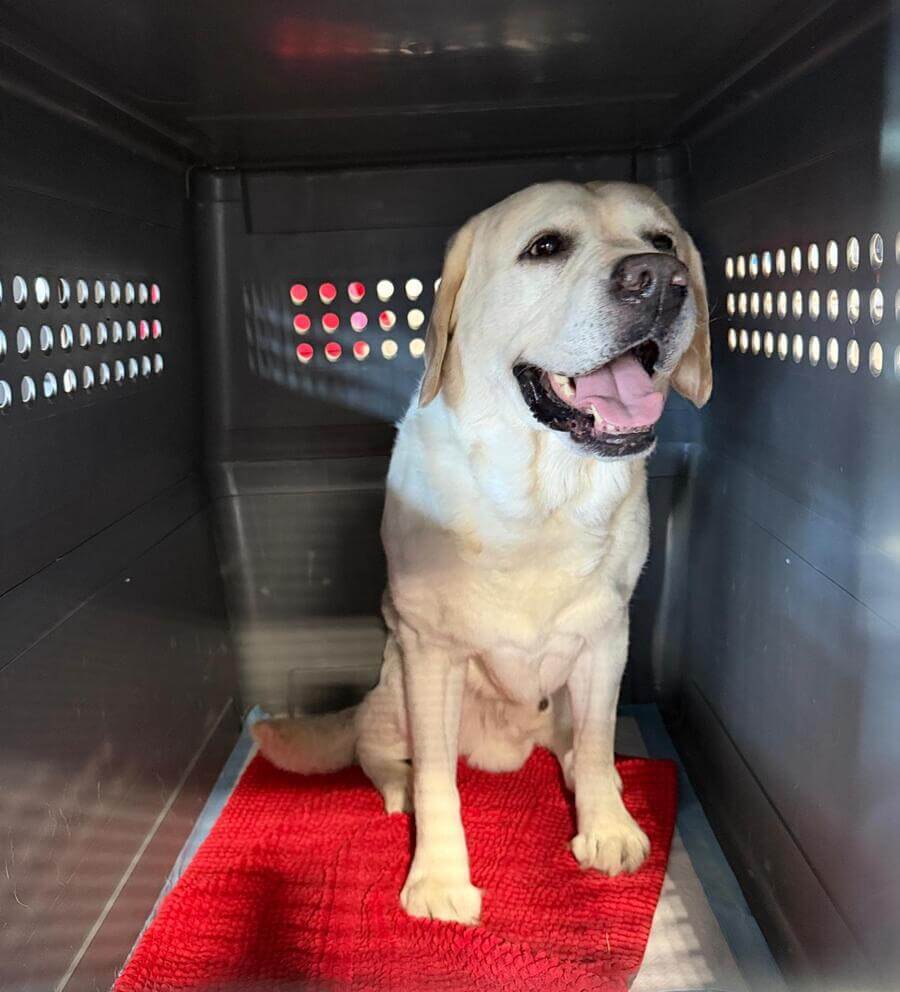
Otis arrived at LAX a few days ahead of his international departure, giving our team time to finalize his paperwork while he settled in with us. In the meantime, he was living his best life — walks, a squeaky puppy toy, and daily photo updates for his family back home. By February 25, USDA had formally approved his documentation, clearing the way for departure.
The next morning, our team brought Otis to the USDA office in El Segundo for his final crate seal, then straight to Air New Zealand for check-in. The ground crew fell for him just as fast as everyone else had — he was checked in, crate sealed, and cleared for takeoff by early evening.
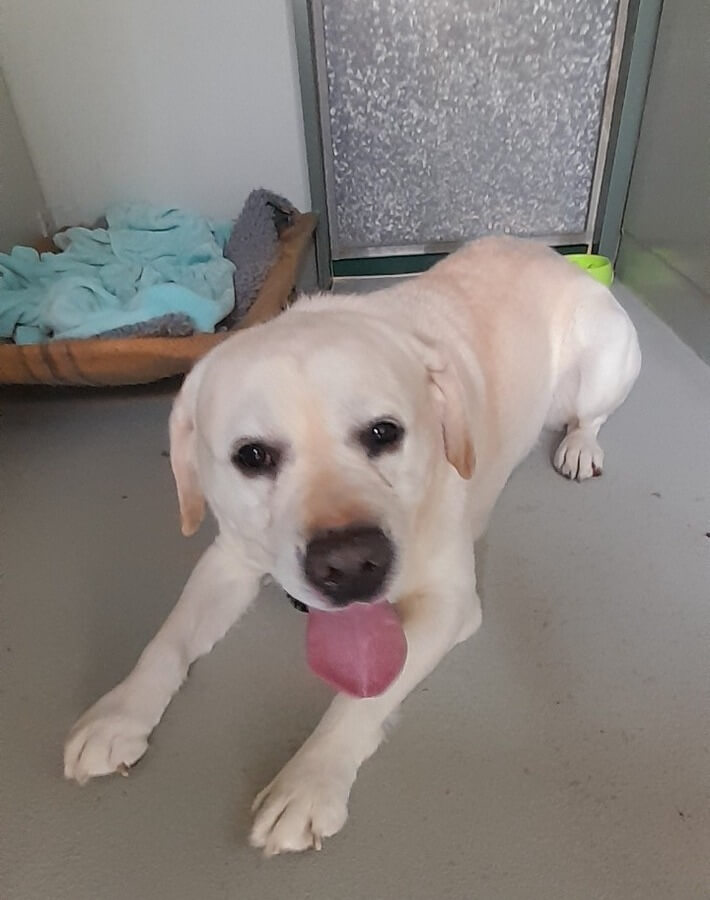
After landing, Otis moved into his mandatory 10-day stay at an MPI-approved quarantine facility — a routine part of every New Zealand relocation, regardless of how smooth the rest of the trip goes. Photos from the facility showed him settled, comfortable, and clearly still every bit the happy pup his family knew he'd stay.
Otis's move followed the same core sequence every U.S.-to-NZ relocation requires: microchip and vaccination records in order, RNATT titer test cleared, import permit and quarantine booking confirmed well ahead of travel, USDA endorsement and crate sealing on departure day, and a mandatory quarantine stay on arrival. The only thing that made his journey easier was starting the paperwork early — the same advice we'd give anyone planning this route.
Preparation Timeline for Your Move
Whether you're traveling under the 2021 or 2026 standard, New Zealand is not a move you can compress. Here's how to sequence it:
-
6+
Mos6+ Months Before Departure
- If your travel date falls after April 2027, schedule the new official ID check now — it must occur at least 6 months before export
- Confirm your pet's country of origin qualifies (Category 2 or 3 for U.S. mainland pets)
- Research and shortlist MPI-approved quarantine facilities near Auckland or Christchurch
-
3–4
Mos3–4 Months Before Departure
- Ensure ISO-compliant microchip is implanted before any rabies vaccination
- Schedule the rabies vaccination and RNATT titer test with a USDA-accredited veterinarian
- Confirm quarantine facility booking and obtain your confirmation letter
-
4–6
Wks4–6 Weeks Before Departure
- Submit your import permit application to MPI Animal Imports (minimum 20 business days ahead)
- Begin crate acclimation with an IATA-approved travel crate
- Book airline cargo space — confirmed, not waitlisted
-
Final
WkFinal Week
- Health Certificate A issued by your USDA-accredited vet, then APHIS-endorsed
- Confirm quarantine arrival logistics for Auckland or Christchurch
- Review our pre-travel checklist the night before
Official Resources
Regulations can shift with little notice, so always confirm current requirements directly with official sources before finalizing travel plans. Our team monitors these continuously — but official sources are always authoritative.
For further information on international pet shipping from the USA, or to explore our global pet shipping services, contact our team today. We coordinate New Zealand and Australia-bound relocations year-round from LAX and SEA-TAC.
Ready to plan your pet's move to New Zealand?
Get a free consultation with our relocation specialists. We'll confirm which IHS standard applies to your travel date and map out the exact timeline.